Kelimeler1 / 4
1. bölüm · Kelimeler
Kimi, kime? — nesne zamirleri
İşi yapan kişi öznedir (I, he, she, they). İşten etkilenen («beni, bana, onu, onlara») ise nesne zamiridir.
Kelimeye dokun; İngilizce okunur.
2. bölüm · Gramer
Fiilden sonra: I love it · Call me
Türkçede «beni, benimle, bana» derken kelimenin sonuna hal eki getiririz. İngilizcede ise fiilden sonra gelen zamir komple kılık değiştirir: I → me, she → her, they → them.
Yalnızca you ve it iki yerde de aynı kalır:
Fiilin arkasındaki zamir
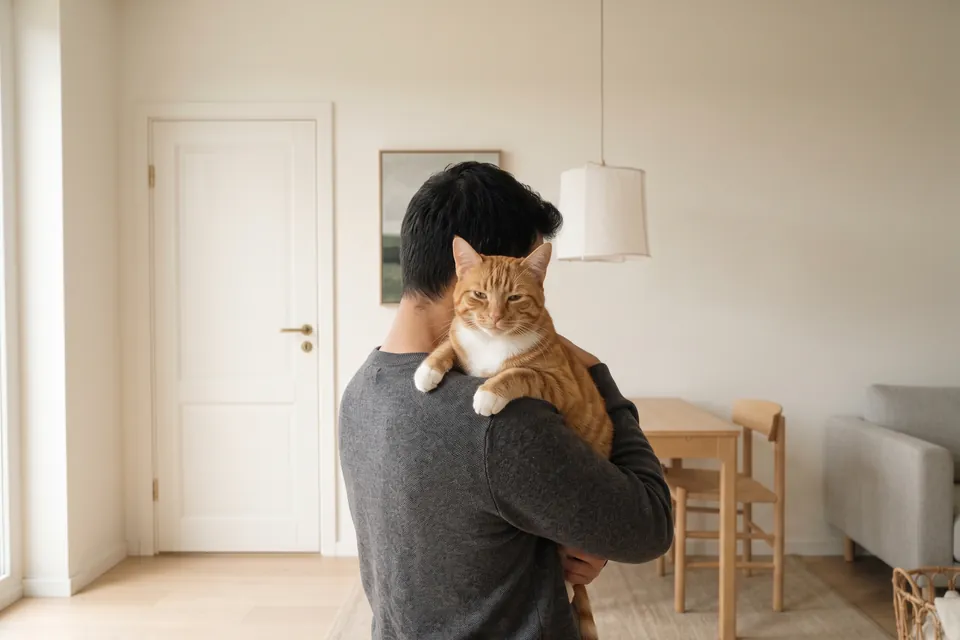 the cat → it
The cat is sleepy. I am carrying it.
Kedi uykulu. Onu kucağımda taşıyorum.
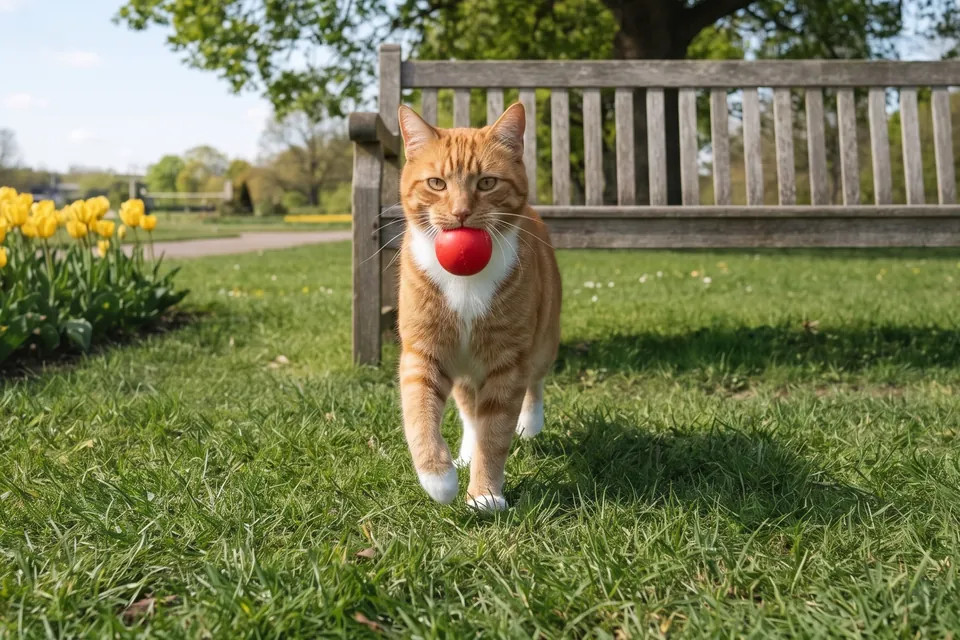 the ball → it
It has the ball. It is bringing it to me.
Top kedide. Onu bana getiriyor.
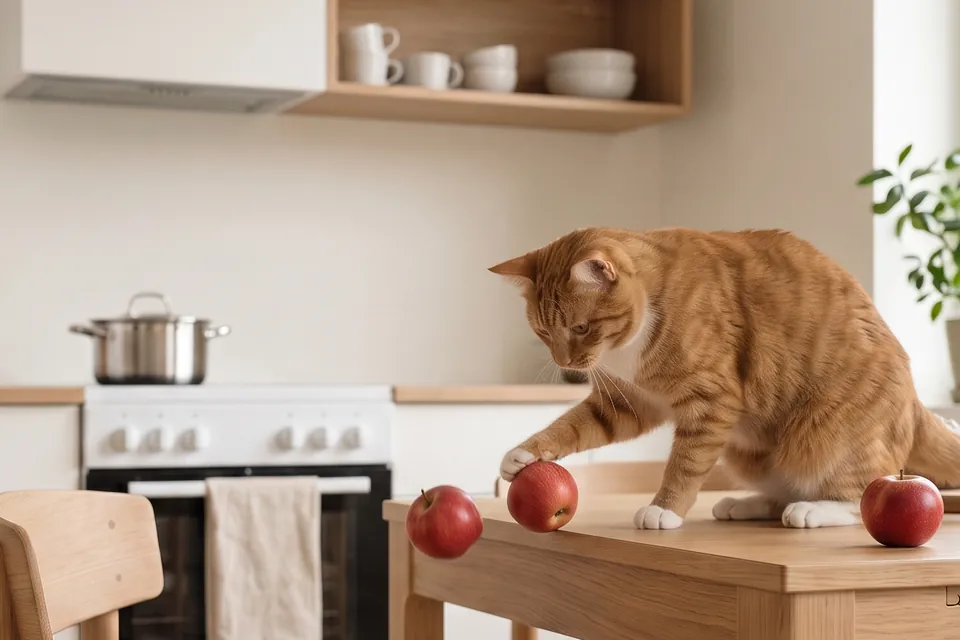 apples → them
There are five apples. The cat likes them.
Beş elma var. Kedi onları seviyor.
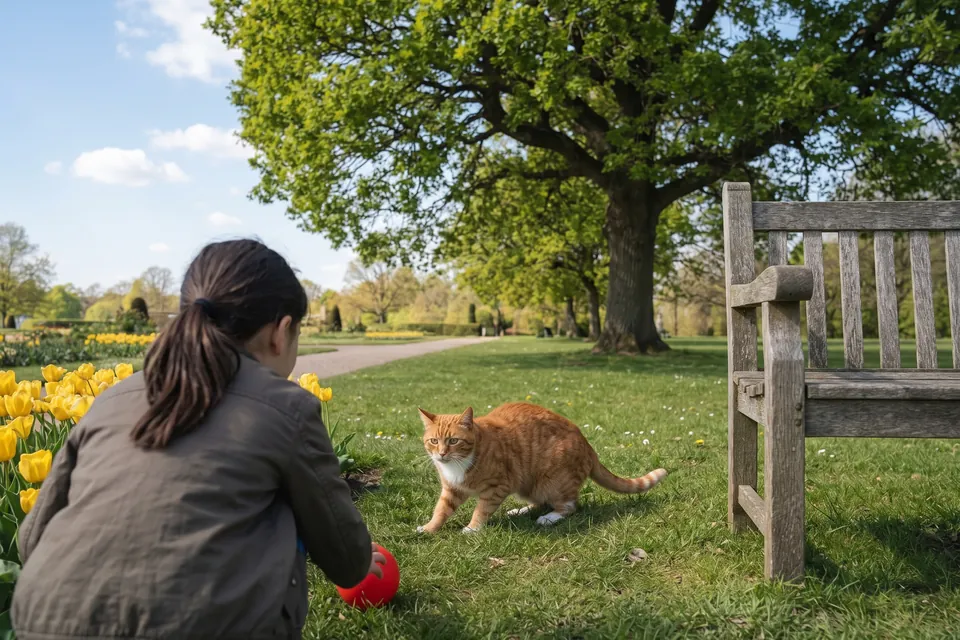 she → her
The girl is in the park. The cat sees her.
Kız parkta. Kedi onu görüyor.
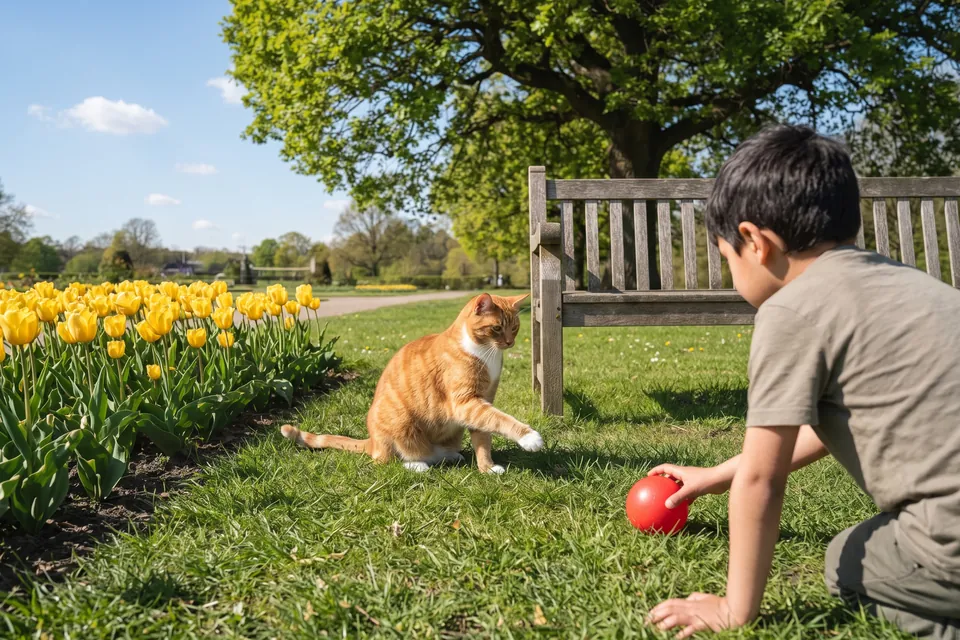 he → him
The boy rolls the ball. The cat watches him.
Çocuk topu yuvarlıyor. Kedi onu izliyor.
Please call me in the evening.
Lütfen akşam beni ara.
Our teacher helps us every day.
Öğretmenimiz her gün bize yardım eder.
En sık hata: Help I! veya I know he. Fiilden sonra asla I, he, she, we, they gelmez; doğrusu Help me! ve I know him.
Cansız nesne tekilse it (one apple → eat it), ama çoğulsa mutlaka them olur (five apples → eat them).
Özne zamiri ↔ Nesne zamiri
Fiilden önce özne zamiri, fiilden sonra nesne zamiri kullanılır.
| Fiilden önce (Özne) | Fiilden sonra (Nesne) | Örnek cümle |
|---|---|---|
| I (ben) | me (beni, bana) | Please help me. |
| you (sen, siz) | you (seni, sana) | I can see you. |
| he (o — erkek) | him (onu, ona) | Do you know him? |
| she (o — kadın) | her (onu, ona) | I always call her. |
| it (o — cansız/hayvan) | it (onu, ona) | It is warm milk. The cat drinks it. |
| we (biz) | us (bizi, bize) | Come and visit us! |
| they (onlar) | them (onları, onlara) | Where are my keys? I can’t find them. |
3. bölüm · Gramer
Edattan sonra: Look at me · with him · to us
at, to, with, for, near gibi edatlardan (ilgeçlerden) sonra da her zaman nesne zamiri kullanılır.
Fotoğraflarda kedinin kime baktığına ve kiminle oynadığına dikkat et:
at me · to her · with him
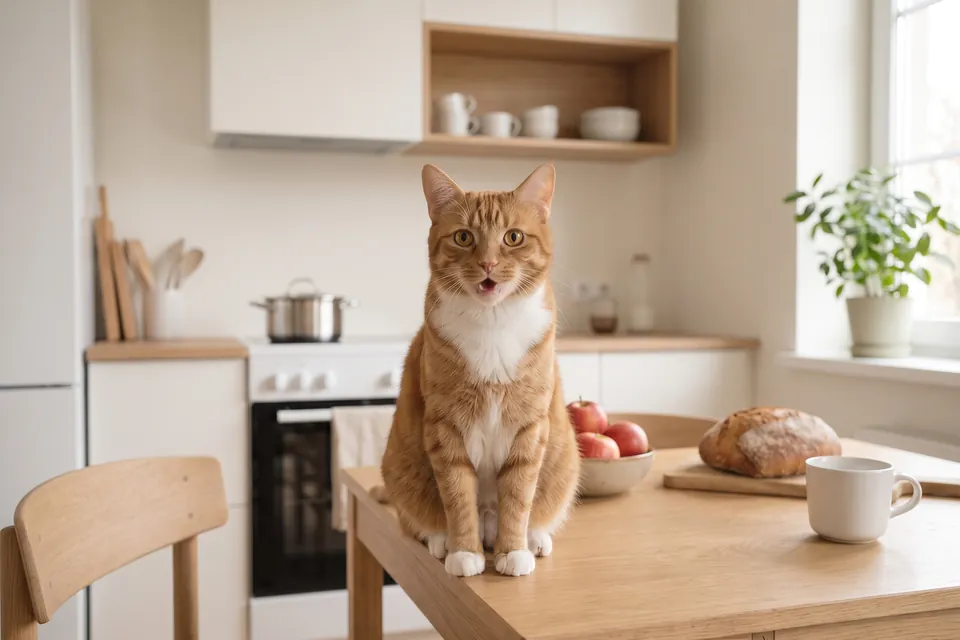 at + me
The cat is looking at me.
Kedi bana bakıyor.
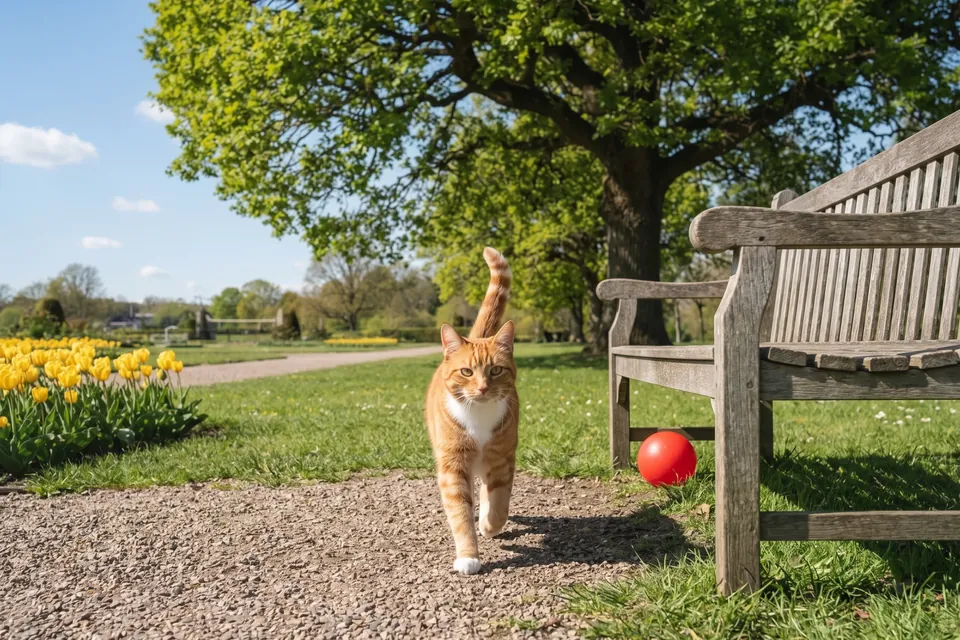 to + us
It is running to us.
Bize doğru koşuyor.
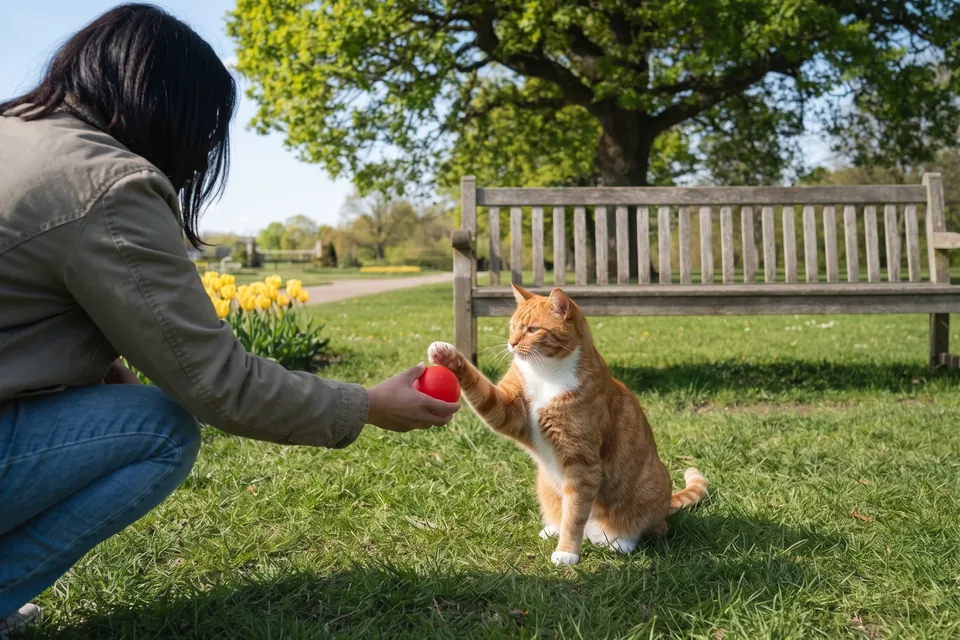 for + it
The red ball is for it.
Kırmızı top onun (kedinin) için.
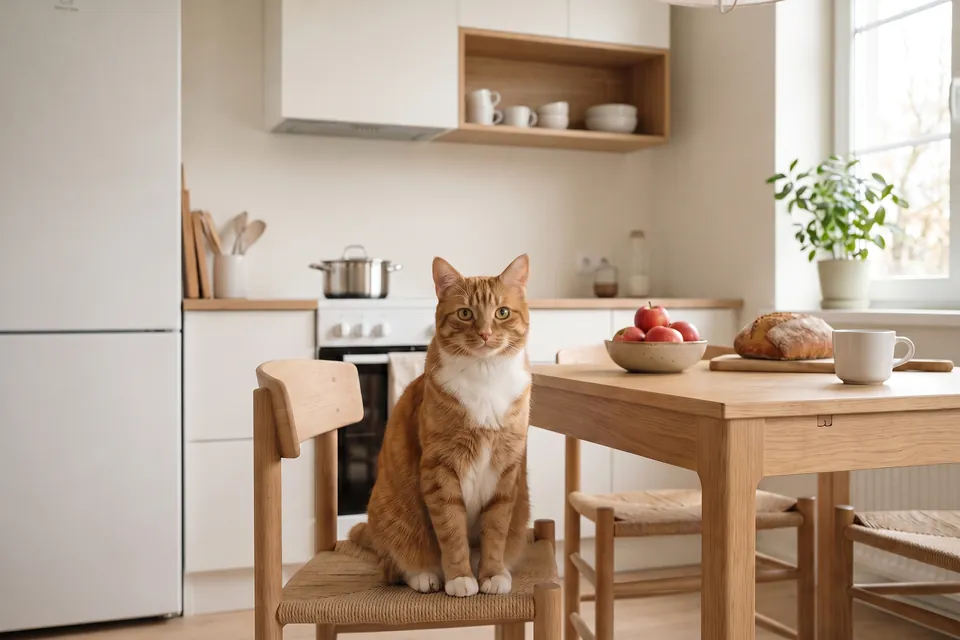 to + me
The cat is listening to me.
Kedi beni dinliyor.
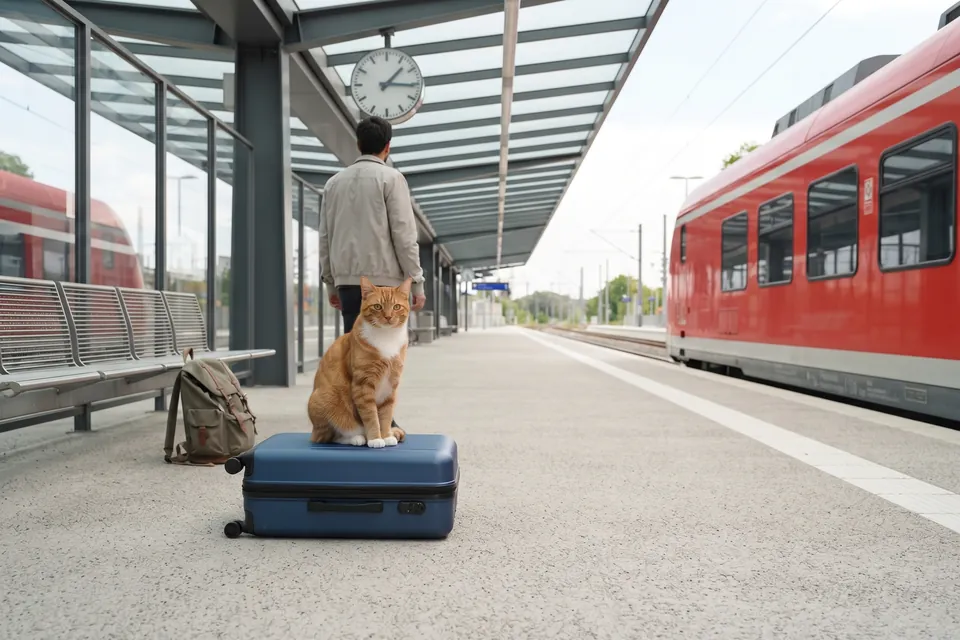 with + him
The cat is at the station with him.
Kedi onunla birlikte istasyonda.
This small gift is for you.
Bu küçük hediye senin için.
En sık hata: Türkçede «onunla» veya «bizimle» derken iyelik eki duyulduğu için with his / with our ya da with he / with we demek. Doğrusu nesne zamiridir: with him ve with us.
İyelik sıfatı her (onun) ile nesne zamiri her (onu/ona) aynı yazılır: her book (onun kitabı — arkasında isim var) ↔ Call her (onu ara — tek başına).
Sık kullanılan edat + zamir kalıpları
Edattan sonra özne zamiri (I, he, she, we, they) kesinlikle gelmez.
| Edatlı kalıp | Türkçe | Örnek |
|---|---|---|
| look at me / him / her | bana / ona bakmak | Look at me, please! |
| listen to me / us / them | beni / bizi / onları dinlemek | Listen to her. |
| come with me / us | benimle / bizimle gelmek | Do you want to come with us? |
| for you / him / them | senin / onun / onlar için | This tea is for you. |
4. bölüm · Alıştırma
Doğru nesne zamirini seç
Bahsedilen kişinin veya nesnenin kim olduğuna (tekil mi çoğul mu, kadın mı erkek mi) bak.
-
1
Look at , please!
Bana bak lütfen!
at edatından sonra özne zamiri (I) değil, nesne zamiri (me) gelir.
-
2
That is Tom. The cat is at the station with .
Tom erkek (he) olduğu için with edatından sonra nesne zamiri him kullanılır.
-
3
The red apples are on the table. The cat plays with .
apples çoğuldur (they); fiil veya edattan sonra them olur.
-
4
My sister is in Istanbul. I call every Sunday.
Kız kardeşim İstanbul’da. Her pazar onu ararım.
My sister = she; fiilden (call) sonra nesne zamiri her gelir.
-
5
We are in the park, and the cat is running to .
we (biz) öznesinin edattan sonraki nesne biçimi us (bize) olur.
-
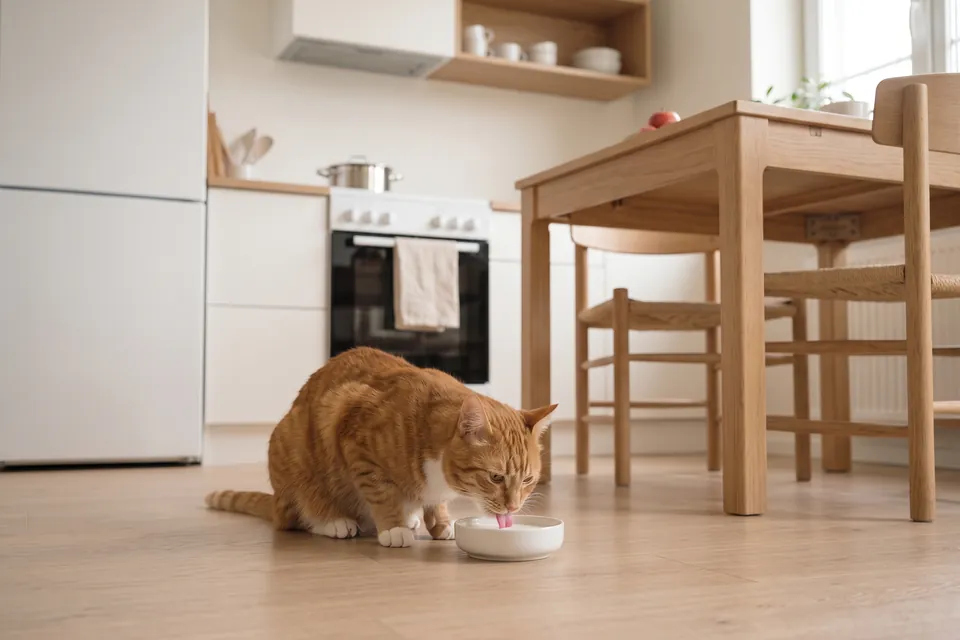 6
6The milk is warm. The cat likes .
milk tekil/sayılamayan bir isimdir (it) → likes it.
-
7
This box is very heavy. Can you help , please?
Bu kutu çok ağır. Bana yardım edebilir misin lütfen?
help fiilinden sonra I değil me gelir.
-
8
My mother is speaking. The cat is listening to .
to edatından sonra she değil, nesne zamiri her kullanılır.